How Blood Works in Flowers and Deities
Every corpse is a coin. Spend it before the sand drinks it back.
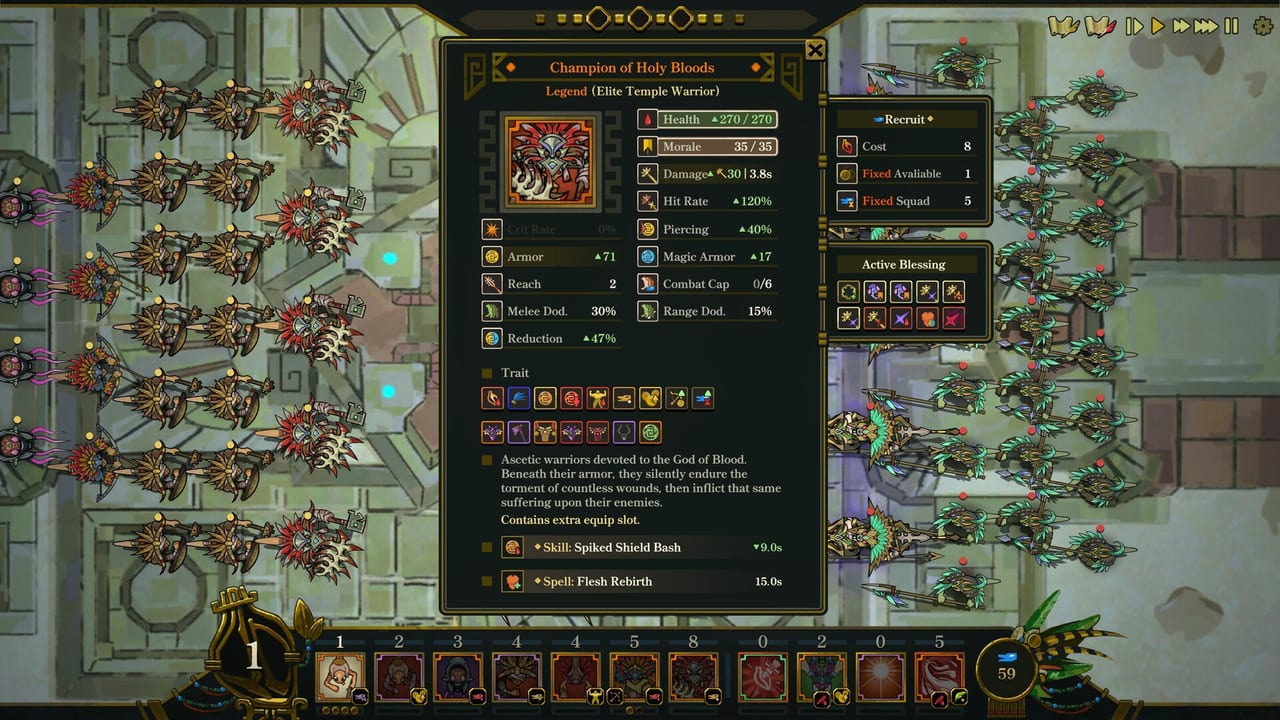
The store page is honest: blood is the precious resource. Flowers and Deities does not give you a second mana bar with a cute name. Units die, the sand stains, and your faith drinks. If you play only the Favor minigame and ignore the puddles, you are fighting with half a kit. This page is the other half.
Read How to Play first if you do not yet know deploy order. Blood spending happens after that click.
Where blood comes from
Any death can feed the pool: yours, theirs, summons, even a ritual that asks you to butcher your own kin. That last sentence is not a metaphor. The Steam copy says that if the arena is dry you can sacrifice allies to claw a win with god-power. City events sometimes offer the same bargain in calmer language: kill everyone in a painted zone, gain Favor, heal the neighbors.
Because both sides bleed, a messy trade can be richer than a clean stomp. A Tribal Survivor dodge line that never dies looks stylish and then discovers it cannot afford the expensive summon. A Flayed Lord line that wants wounds may deliberately take a fight that will produce corpses. Neither approach is “correct.” They are different faiths.
Puddles are spatial. They sit where the bodies fell. If the front rank is a meat grinder and you try to summon a backline cutter on a dry tile, the ritual drinks slowly or paths into the clubs. Players already reported this with summonable wither beetles: drop them in the center and they brawl; drop them behind the front and they sometimes use the skill but still crash the first rank; only a lucky overlap reaches the mages. Positioning and Summons is the formation chapter. Here the lesson is simpler: stand where the blood is if the spell needs to drink.
What you spend it on
Spells on the skill bar are the main sink. Heals, dodge auras, horn-summoned spearmen, underworld rangers, blood-letter rituals: most of them have a cost that is not just Favor. Watch the icon when the puddle is fat. If you hoard for a dream turn, morale may already be gone.
Items modify the drink. Demo loot included an Obsidian pole sickle with global Favor gathering, a Statue of Vengeance that spat Bloodshades on death, and a blood-biting fang ornament that raised collection efficiency on hit. Those names will rotate as the Forge rerolls, but the pattern stays: some gear makes more blood, some gear spends death itself as a trigger.
Bloodshades are a recurring creature of the ruleset. Several items and blessings spawn them when anyone dies, or when your unit dies, or when a wound stack transfers. They are not a separate mode. They are a build verb. Patch 8.15 specifically “optimized some of the algorithms for Bloodshades,” which is developer-speak for: they were expensive, messy, or both. If your laptop wheezes on a shade-heavy blessing, turn on Low-End Mode from Controls before you delete the build.
Sacrifice without throwing the run
Sacrificing kin is a last-ditch button, not a personality. Use it when:
- The puddle is empty and a fight-winning spell is one drink away.
- A doomed remnant is about to flee anyway and you would rather convert them into a summon.
- An event paints a ritual zone and the math (Favor plus a heal) beats the lost squad size.
Do not use it because the faith is edgy. A Destitute Noblewoman with thin servant stacks can delete her only wall and then learn what a jaguar demon charge looks like up close. If you want a bleed identity, take the Flayed Lord and items that move wound stacks. Let the enemy donate the corpses.
Dry arenas and long campaigns
Later 6×5 nodes and hidden arenas can feel dry because one side snowballs. If you crush so fast that nobody dies in the right place, your expensive rituals never fire. That is a good problem. Win the node, then in the next series deploy a slightly greedier line so the spell bar has something to sip.
The opposite problem is a slog where both fronts grind and your FPS dies. The Underworld map is the known offender. Patch 8.15 reduced performance issues there and added Low-End Mode that disables rain, buff effects, and hit effects. Blood-heavy builds should treat that toggle as part of the kit.
Blessings that restore health every few seconds change the blood graph because fewer of your units die. Healing faiths (Quetzalcoatl in the demo) can starve shade triggers. That is acceptable. You are buying stability. Pair those blessings with spells that do not require a massacre.
When you understand the puddle, recruiting gets easier: a unit that dies usefully can be better than a unit that never dies. The Units Tier List calls out roles, not immortality. For item sinks that mention blood, open Magic Items. For the campaign points where you will need a stored ritual, keep How to Beat the Campaign next in the tab.
Frequently Asked Questions
Quick answers drawn from the current Steam build.
Does my own army’s death generate blood?
Yes. The official description says every unit lost, yours or theirs, fills the pool. That is why sacrifice is a legal play.
Why did my summon ignore the backline?
Many summons path from the tile you clicked and drink the nearest puddle. A dry back tile can send them into the front brawl. Place them on stained sand when you can.
What are Bloodshades?
Triggered spirits spawned by certain items, deaths, or wound transfers. They are a build theme, and patch 8.15 retuned their performance cost.
Should I always sacrifice when the arena is dry?
Only if the spell you unlock wins the series. Sacrificing your last wall to cast a vanity summon is how runs end.